What Is Business IT?
IT touches almost every part of a business. But it can be hard to understand what it is.
In this post, we'll explain what business IT means, what it consists of, and what makes it work for your business.
Let's use a trade business as an example.
Part 1
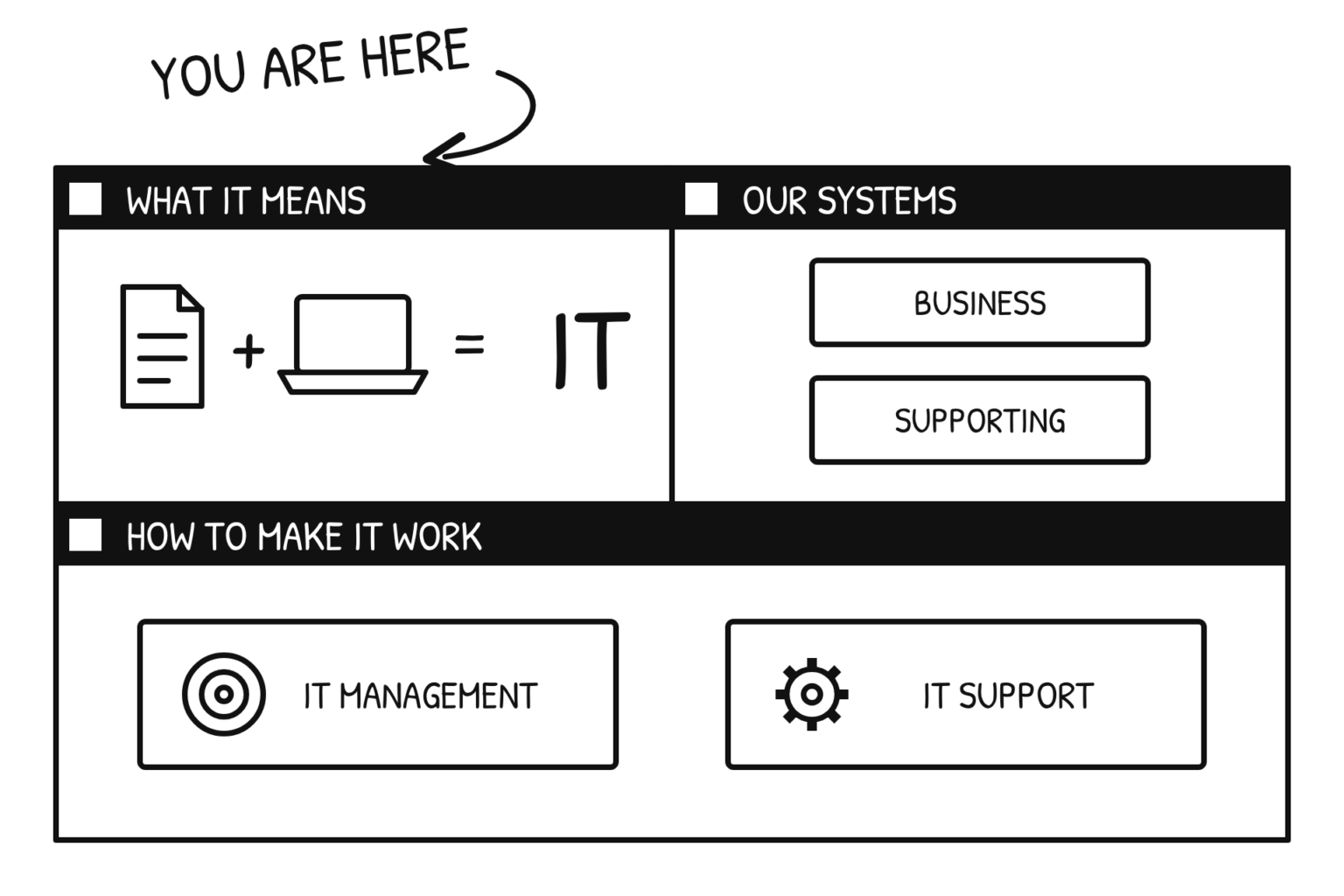
What IT Means
IT stands for Information Technology. To understand the purpose of IT, we first need to understand what information and technology mean.
Information
In short, information is data given context, so your business can make decisions and take action.
To understand this, let’s use an example of a job.
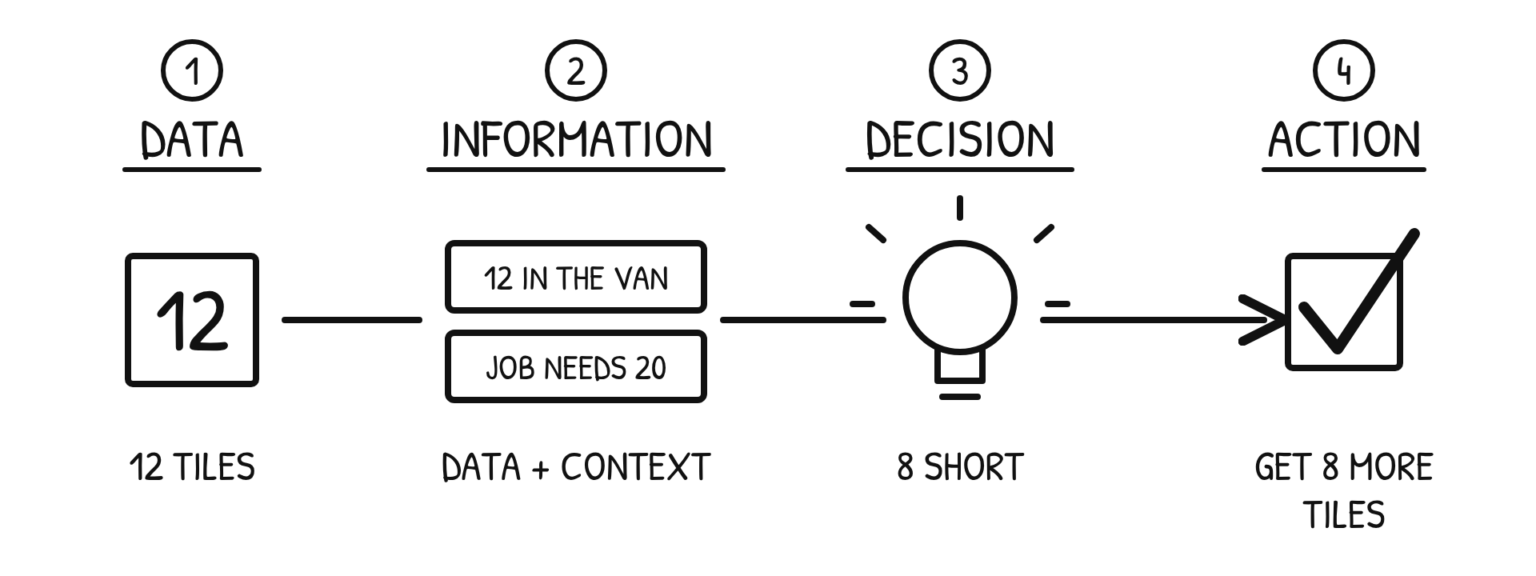
Data is a fact you record. You count 12 tiles in your van and record it. The 12 is the data.
When you give that data context, it becomes information. There are 12 tiles in the van available for tomorrow’s job.
You also have the information that tomorrow’s job needs 20 tiles.
Using both pieces of information, you can make decisions. You can see you’re 8 tiles short and decide to get more before the job.
This decision turns into an action you take. Get 8 more tiles before tomorrow.
Without this information, you show up to the job short 8 tiles, drive back to the supplier, and lose half a day.
Technology
Technology is tools we create to complete tasks more efficiently.
Efficient means getting more from fewer resources.
Technology covers a large range of tools. A pipe wrench is technology. So is a van.
In IT, we use digital technology. Digital technology is electronic tools that work with information to complete tasks more efficiently.
Combining Information and Technology
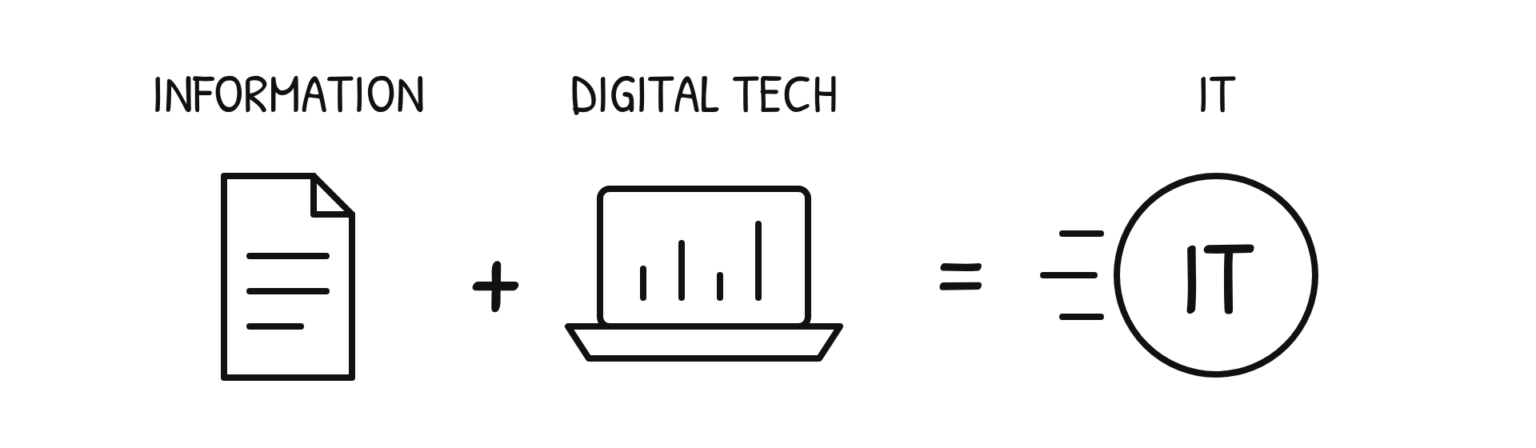
Now we understand the purpose of information in a business, and what digital technology is. Put them together and you get IT.
IT is using information with digital technology to allow your business to make decisions and take action more efficiently.
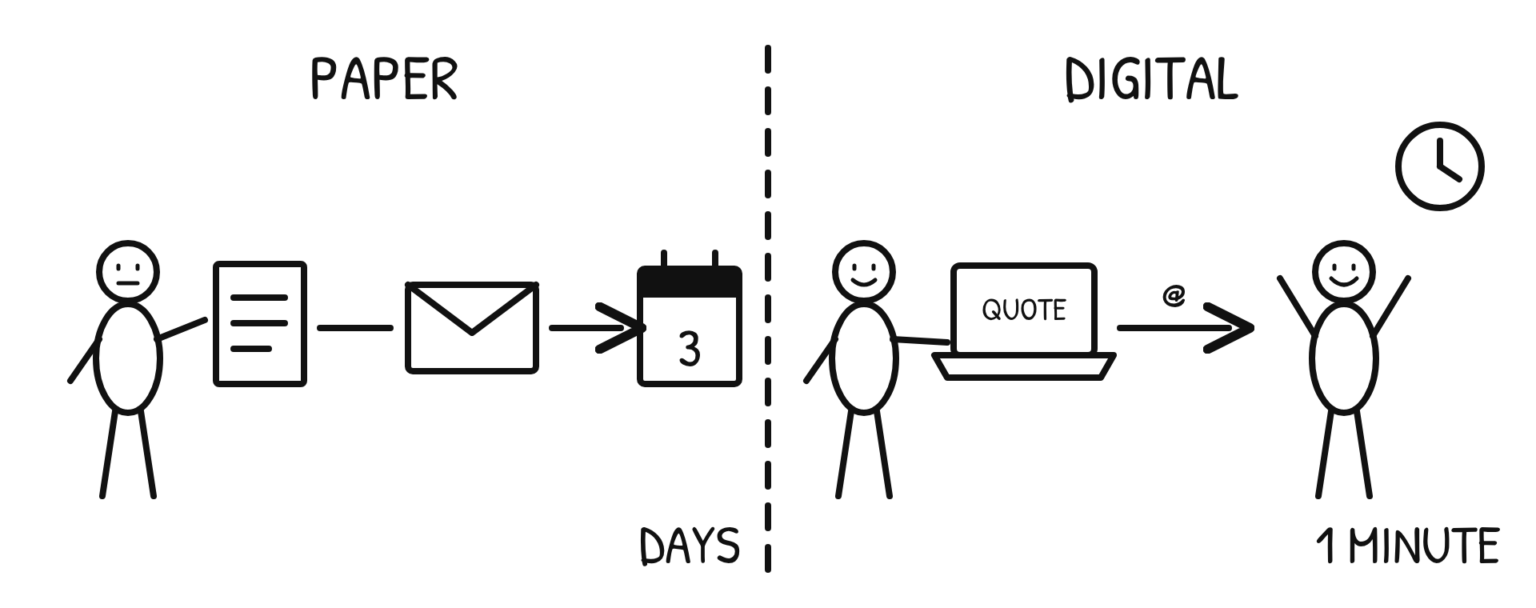
Take sending a quote.
Without digital technology, someone writes it on paper and posts it, and the customer gets it days later.
With digital technology, you open the quoting application on a device, build the quote from the customer’s details, and email it over the internet. The customer has it in a minute.
The task doesn’t change. The work to do it does.
Part 2
What Business IT Consists Of
Now we understand what IT means, what does it consist of in a business?
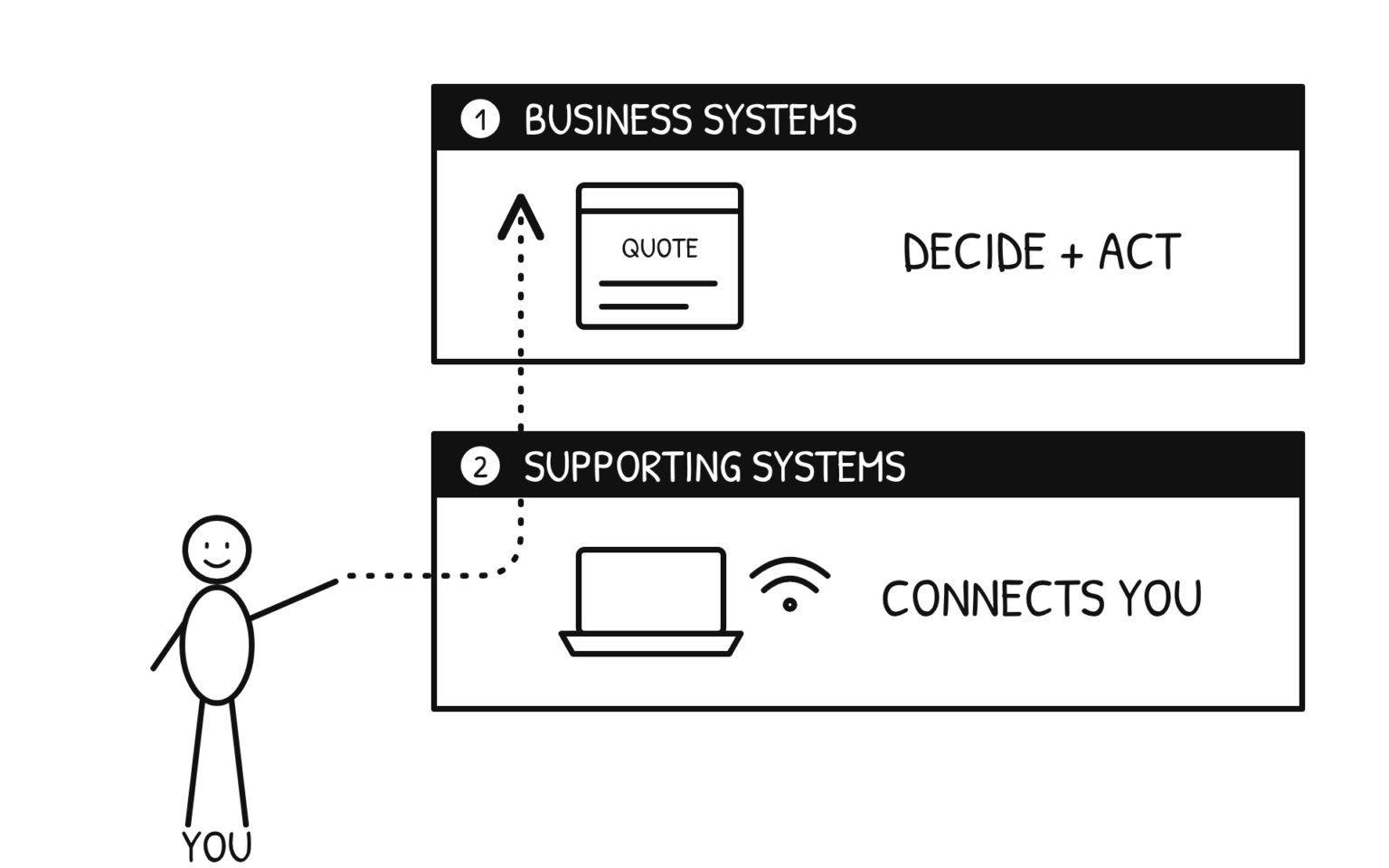
Business IT consists of two types of systems.
Business Systems
Business systems are the digital technology that helps people make decisions and take action.
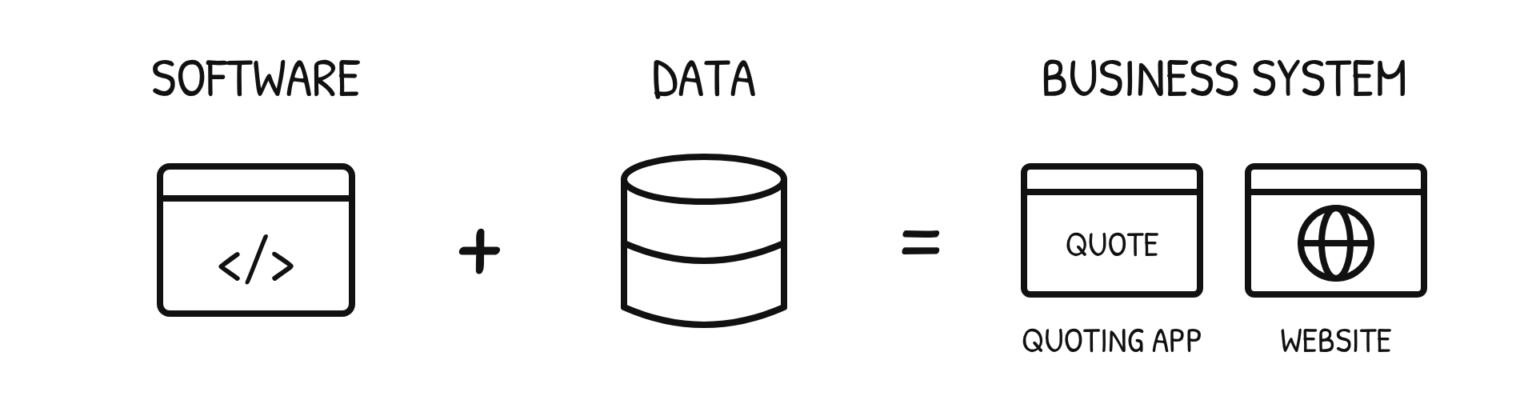
These systems bring together software and data to get work done.
Take the quoting application you use. It has data, like customer details and prices, and software that builds the quote. You decide on a price and send the quote.
Your website is a business system too. Its software loads the page, and the data you’ve put on it helps customers make decisions and take action. They choose a service and book a job.
Supporting Systems
Supporting systems are the digital technology that connects people to your business systems.
These systems keep your business systems secure, reliable and ready when people need them.
Your device is a supporting system. It supports you by giving you something to open the quoting application on.
Your network is a supporting system too. It supports you by connecting your device to the quoting application across the internet.
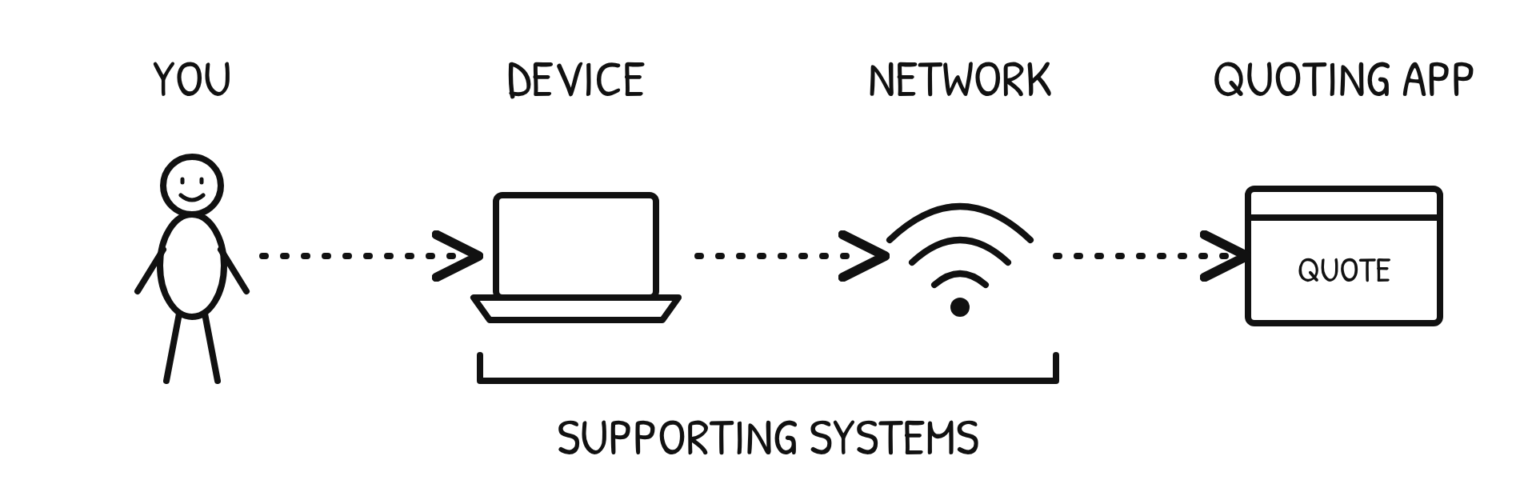
Together, your business systems and supporting systems make up your business IT. They help your team and your customers make decisions and take action more efficiently.
Part 3
What Makes IT Work for a Business
Now we know how your IT systems make your business more efficient. But how do you make sure they stay efficient?
You need to keep your current systems working and change them when they no longer meet your needs.
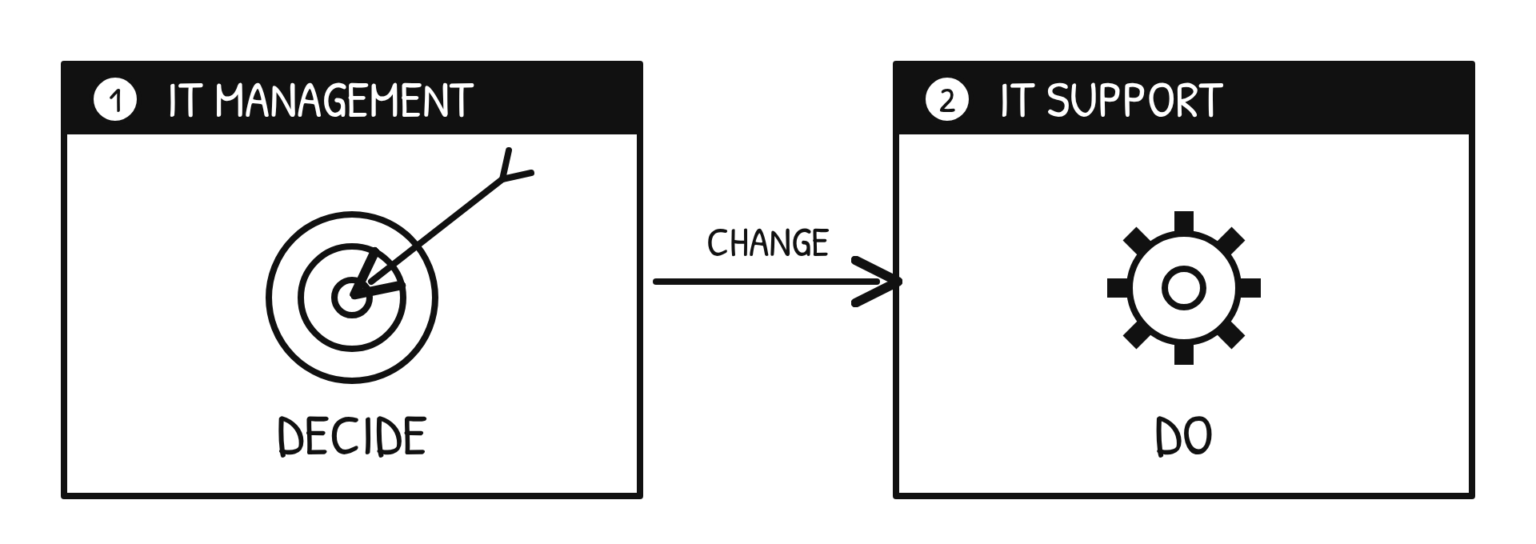
There are two parts to this: IT Management and IT Support.
IT Management
IT management checks if your IT meets your business needs and plans changes when it doesn’t.
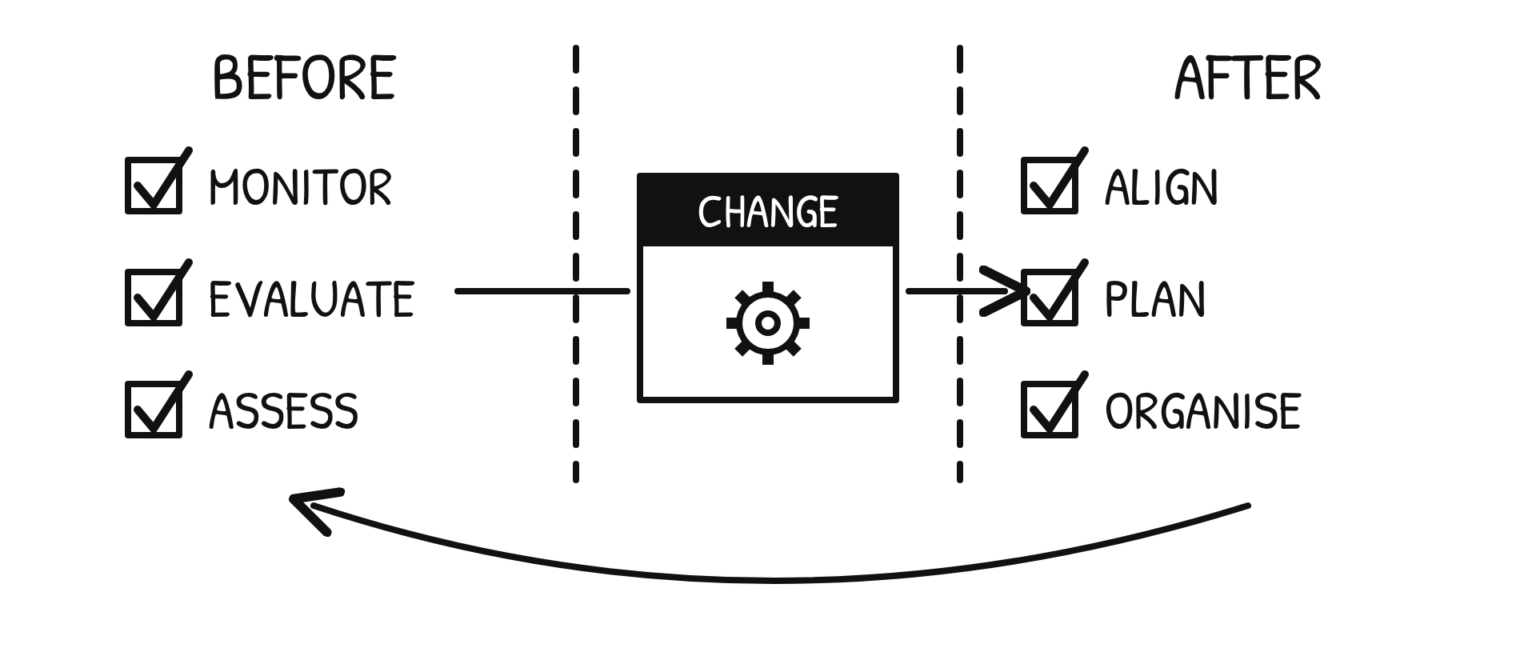
Management watches how your IT affects your business. It works out what those effects mean. Then it decides if a change is needed.
Before a change, management aligns it with your business goals. It plans what the change looks like and organises how to implement it.
IT Support
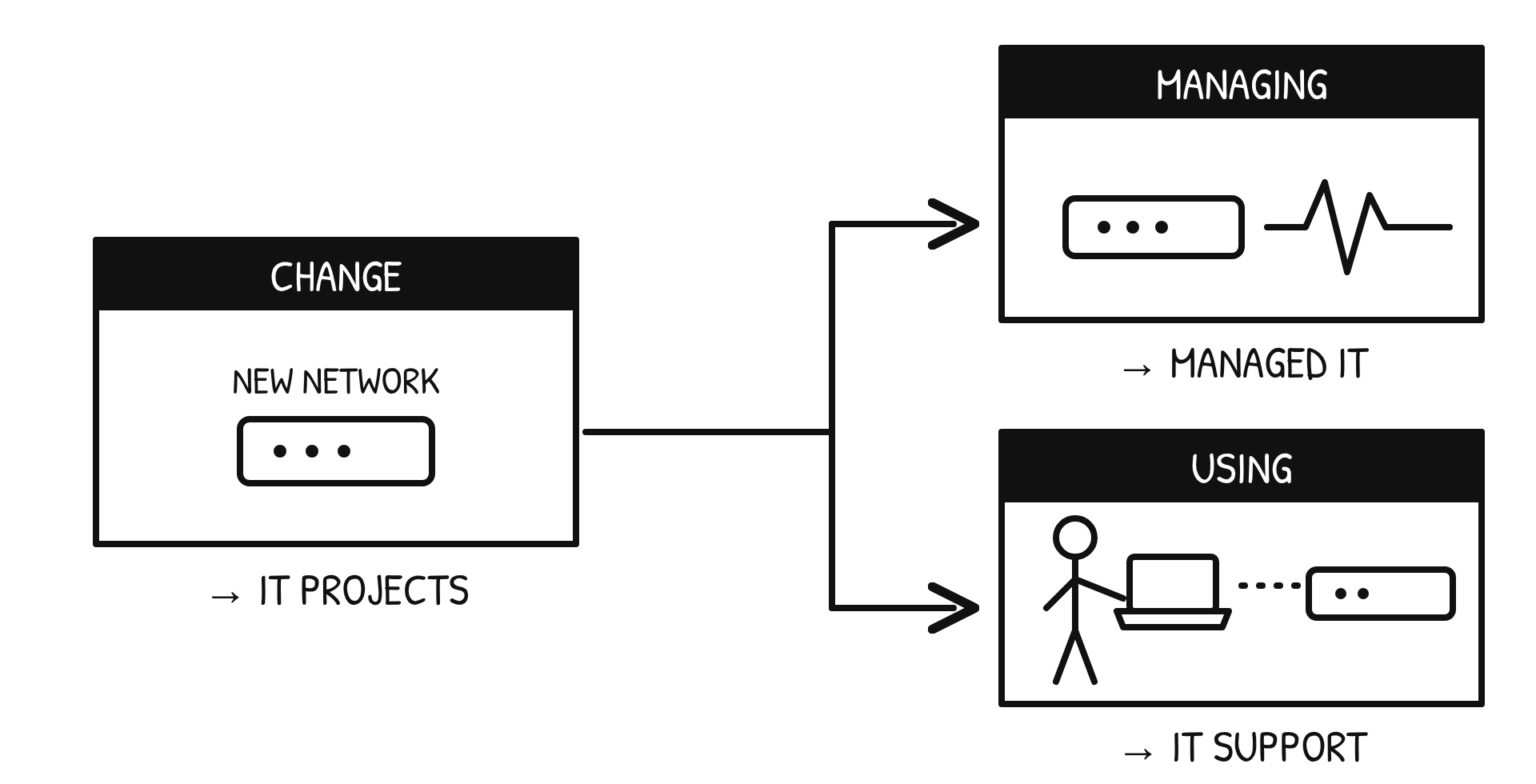
IT support implements changes and supports them once they’re in place.
When a change is needed, support builds a new system or changes an existing one.
Once the change is in place, support keeps the systems working as intended. It also helps people use them.
Your systems make your business more efficient. IT management and IT support make sure they keep doing it.